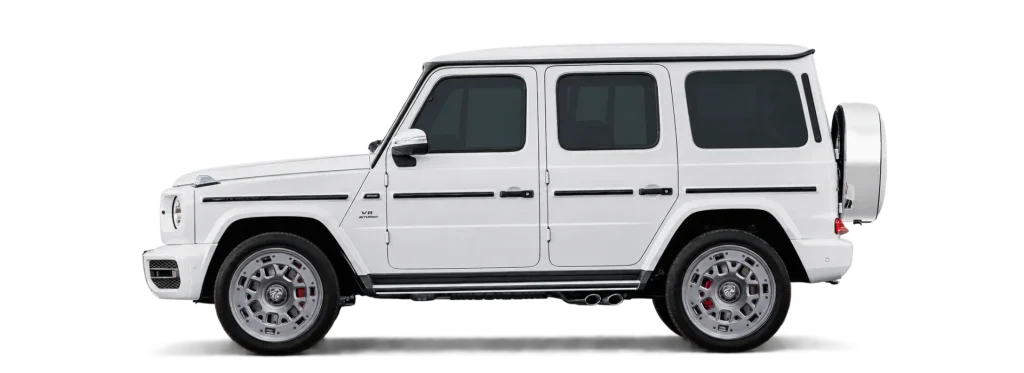

Engineering & R&D
Vehicle Armoring Engineering and Custom Project Development
Our engineering team develops vehicle armoring solutions around each client’s vehicle and its intended use. We assess the vehicle and project requirements to define the proposed armoring work and technical scope.
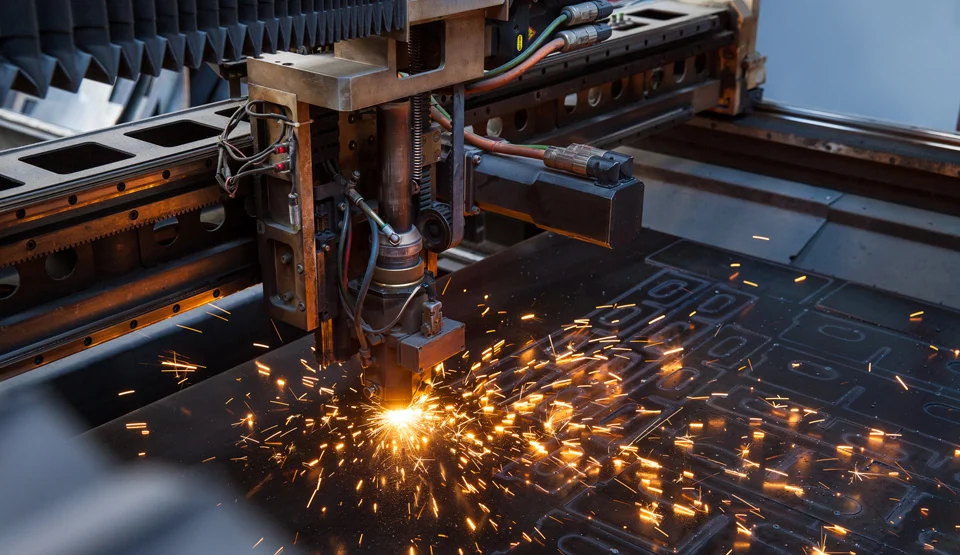
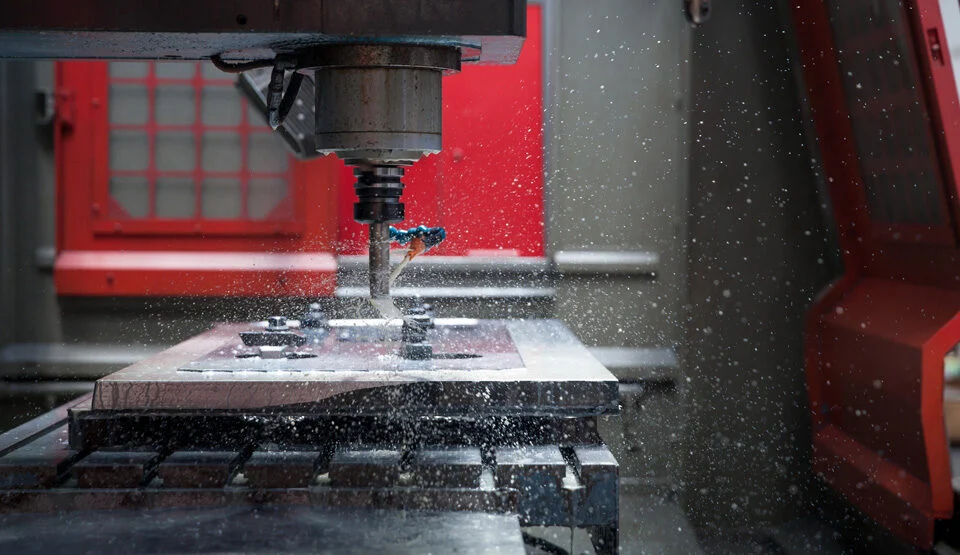
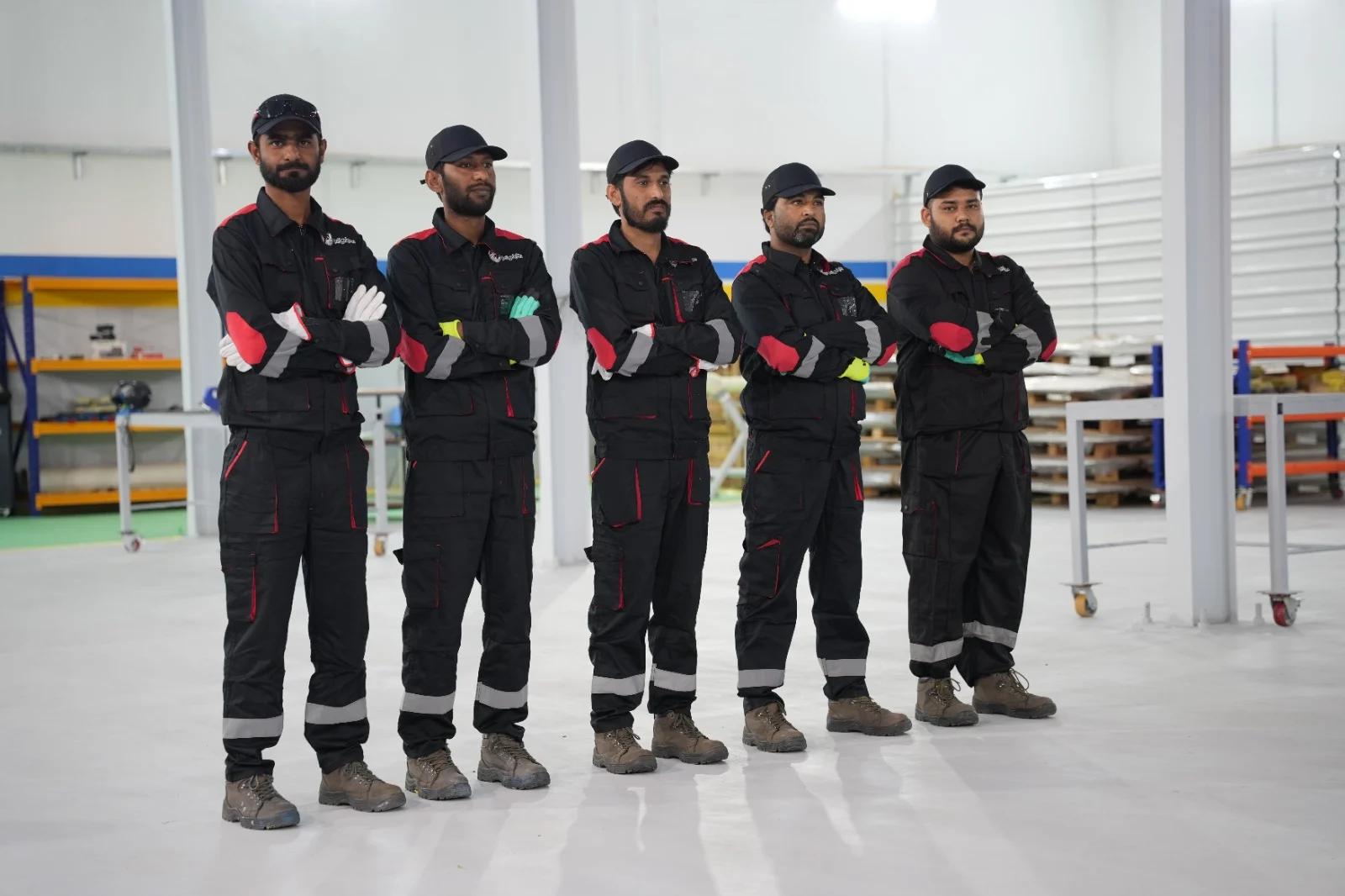
Engineering, R&D and hands-on vehicle work.
Baghdad facility
01
Vehicle-specific engineering
An armoring project involves more than selecting protective materials. The vehicle platform, structure, configuration and intended use all inform the engineering review. We consider these factors to develop a project approach suited to the vehicle and the client’s requirements.
- Vehicle platform and body structure
- Existing configuration and equipment
- Intended use and operating conditions
02
Integrating protection with vehicle function
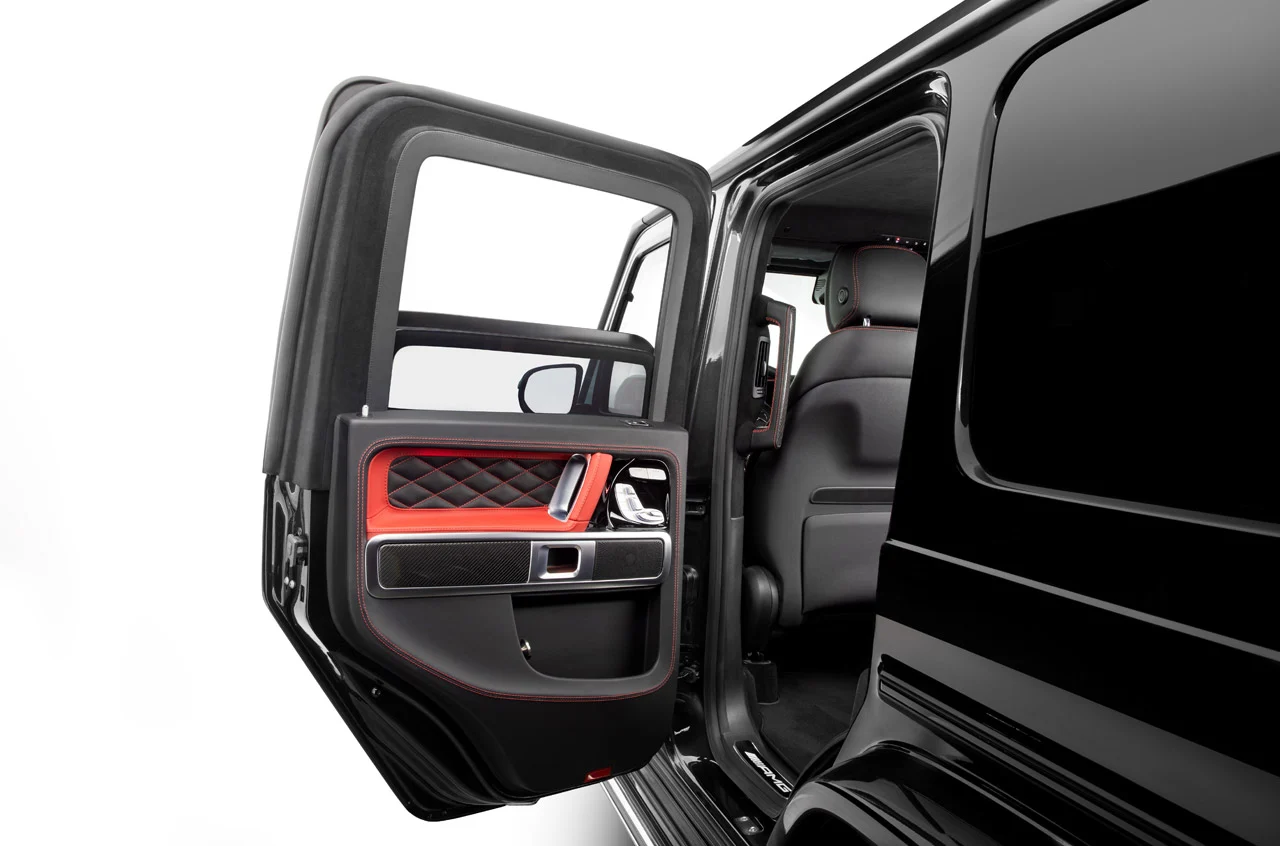
Protection work can affect a vehicle’s weight, layout, access and operation. These considerations are reviewed as part of project planning, alongside the requested configuration and any practical requirements identified during assessment.
- Added weight and load on the vehicle
- Cabin layout, doors and access
- Everyday driving and operation
The final work depends on vehicle suitability and the scope agreed for the project.
03
Custom vehicle development
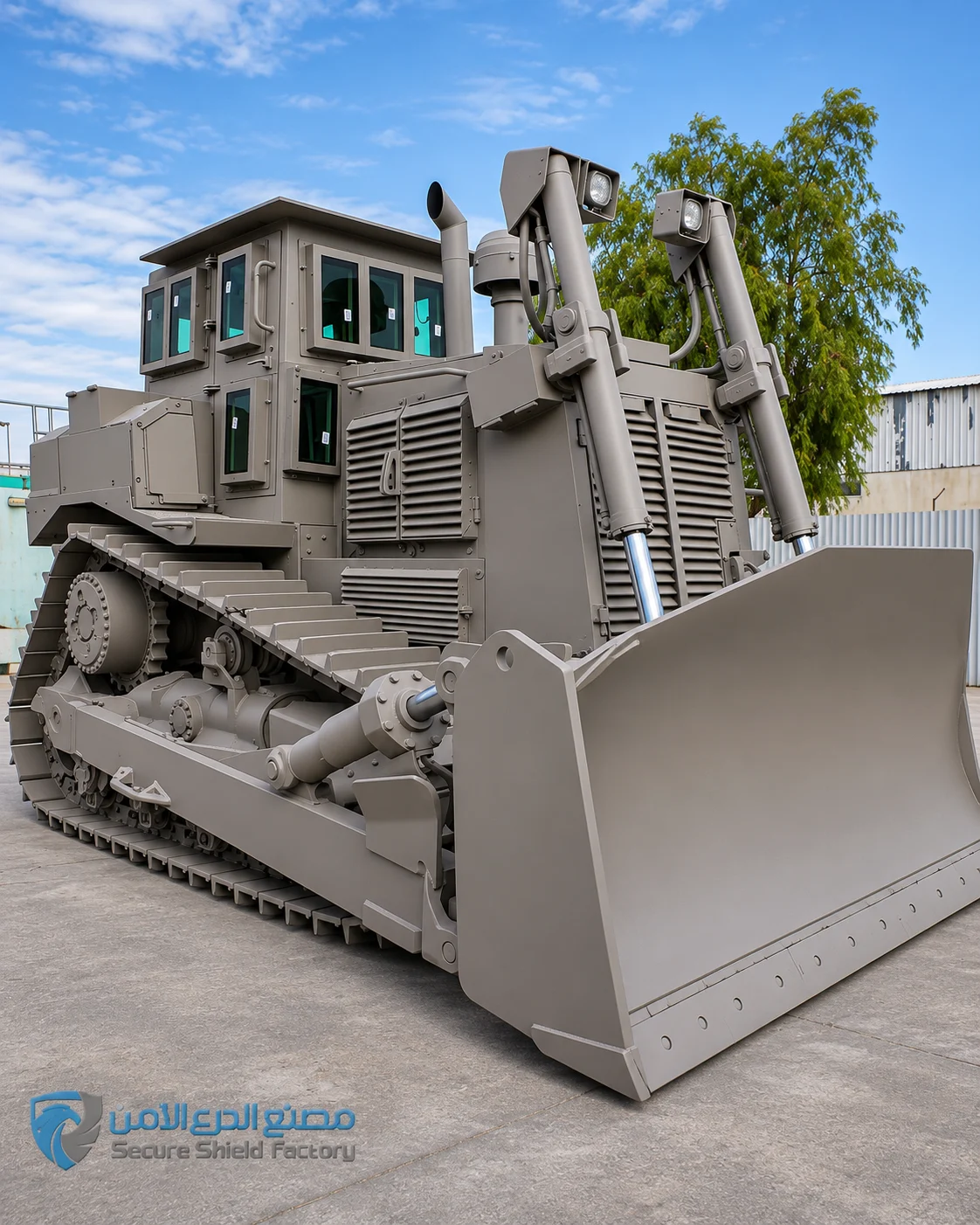
Some enquiries involve requirements beyond standard passenger vehicles. These may include specialist transport, business fleets, ambulances, buses or other custom vehicle applications. We review the proposed role and configuration before defining whether the project can proceed and what information is needed.
- Specialist transport and business fleets
- Ambulances and buses
- Other custom vehicle applications
04
Technical review and project documentation
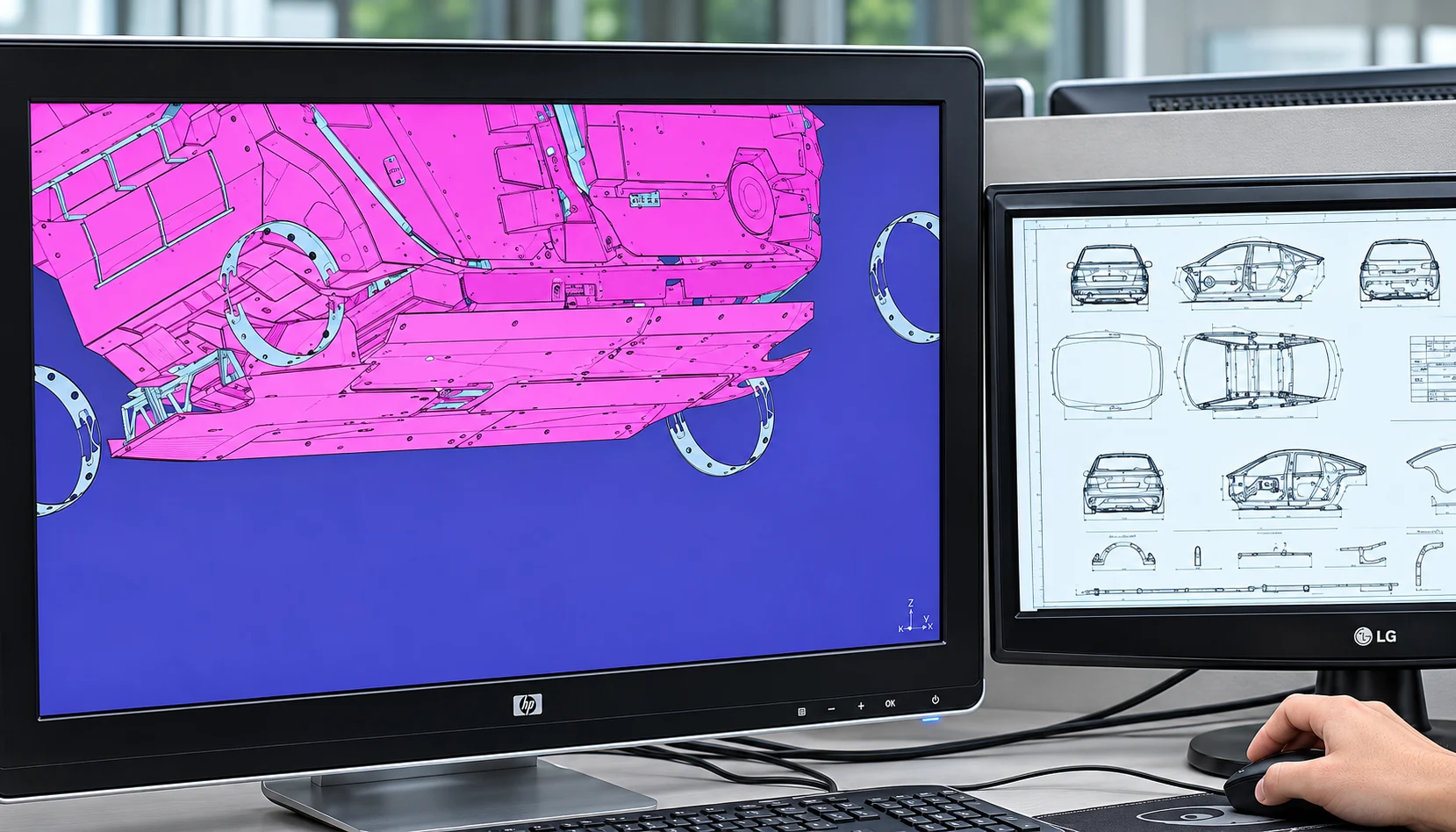
Technical requirements and documentation are established for each project. The applicable specifications, inspection records and handover documents depend on the agreed work and available project evidence.
- Applicable specifications
- Inspection records
- Handover documents
A government permit to operate in vehicle armoring does not, by itself, certify a particular vehicle or protection level. Any vehicle-specific certification or test evidence should be confirmed and documented separately.
Engineering scope
Project review may consider
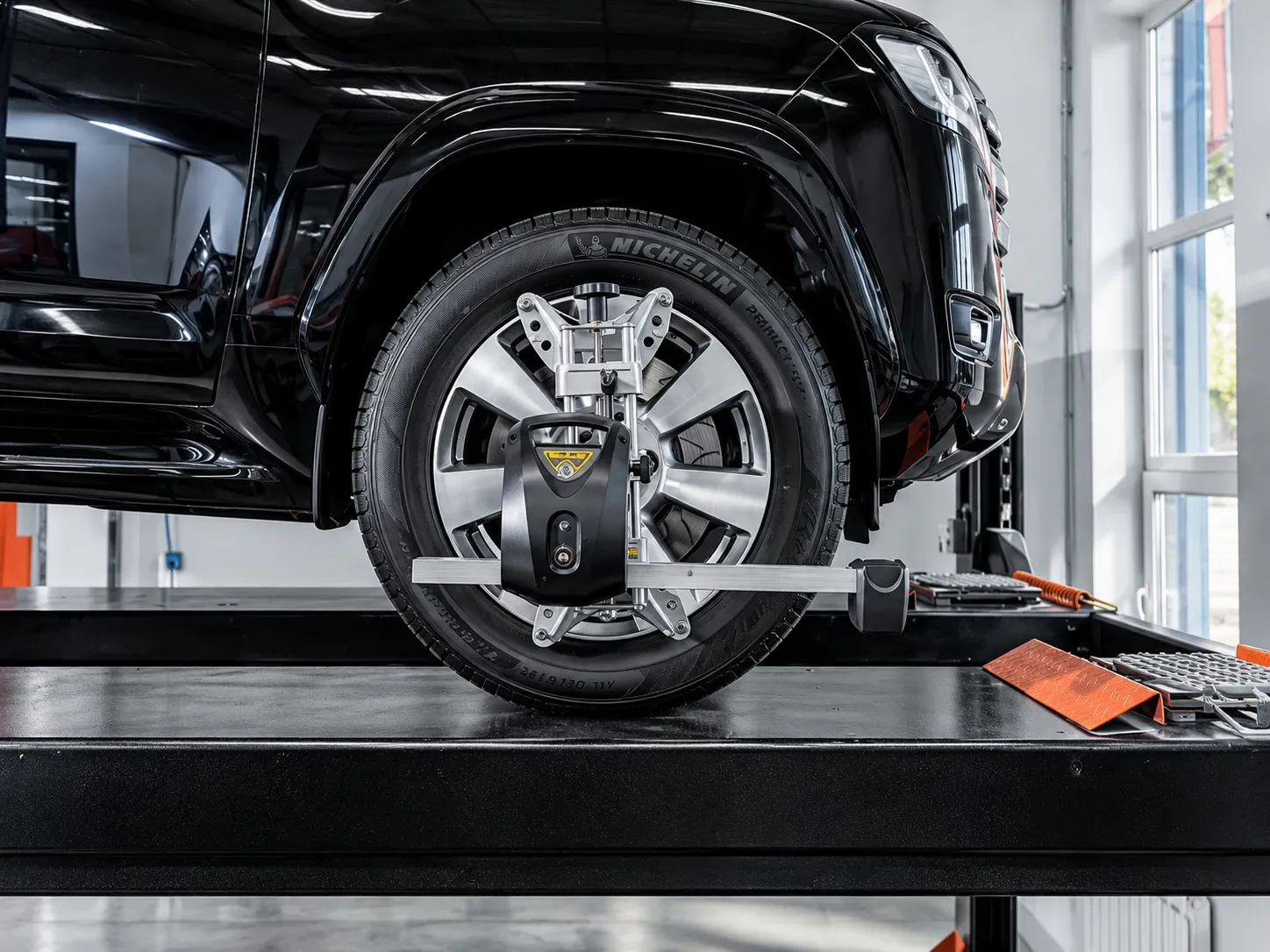
Vehicle and components
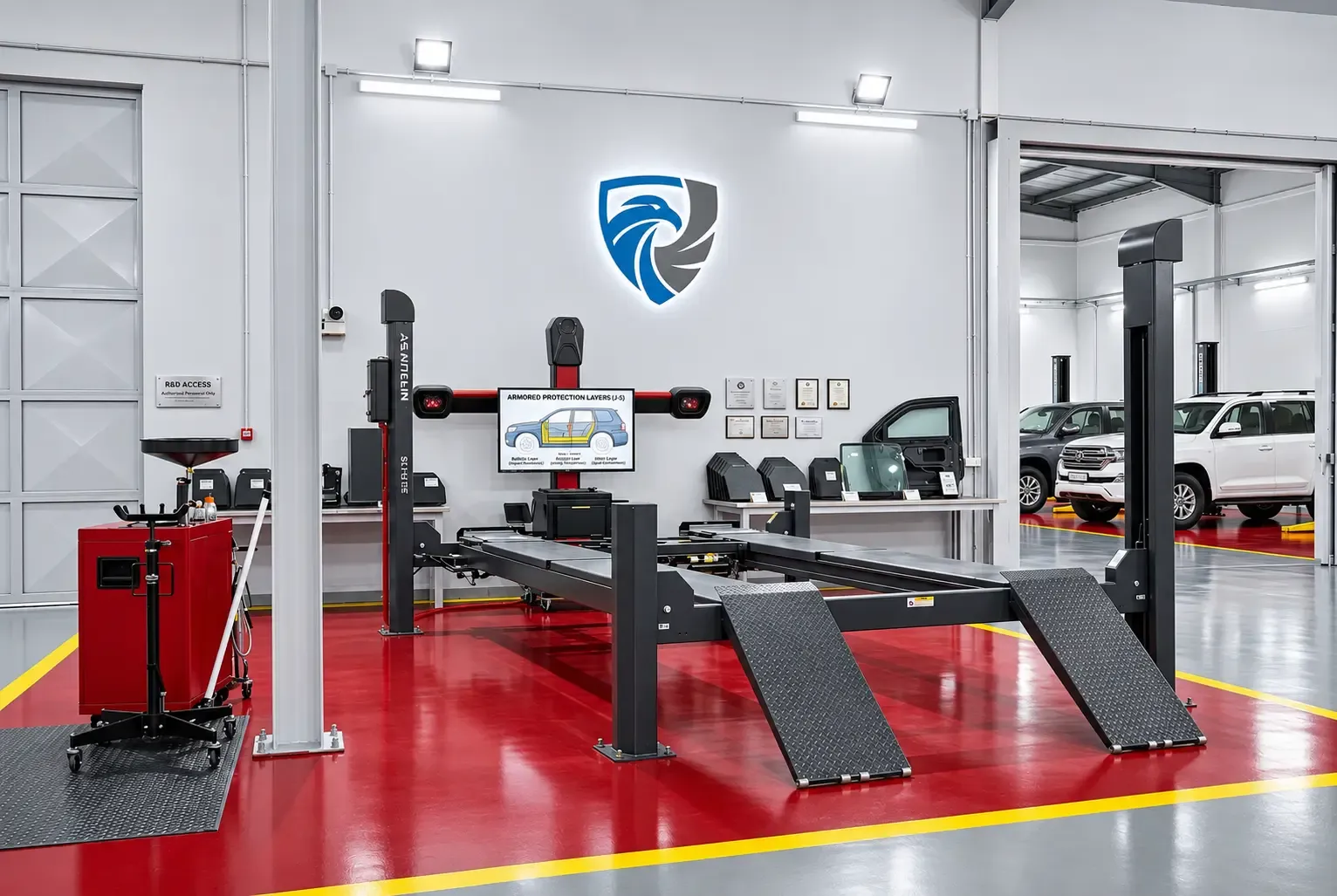
- Make, model, condition and intended use
- Component removal and refitting requirements
Protection and materials
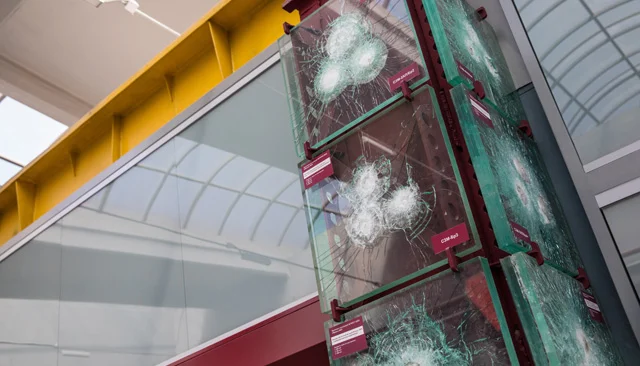
- Requested protection specification
- Materials and technical details relevant to the project
Integration and handover
- Custom modifications and equipment
- Inspection and handover information
The final scope depends on the project.
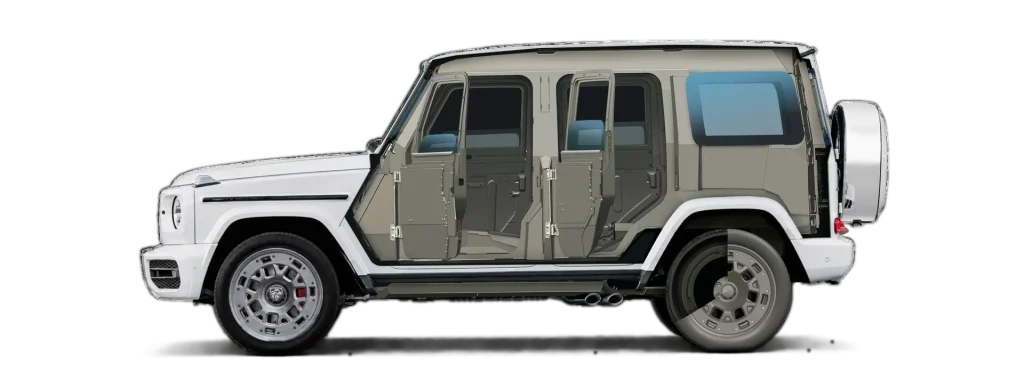
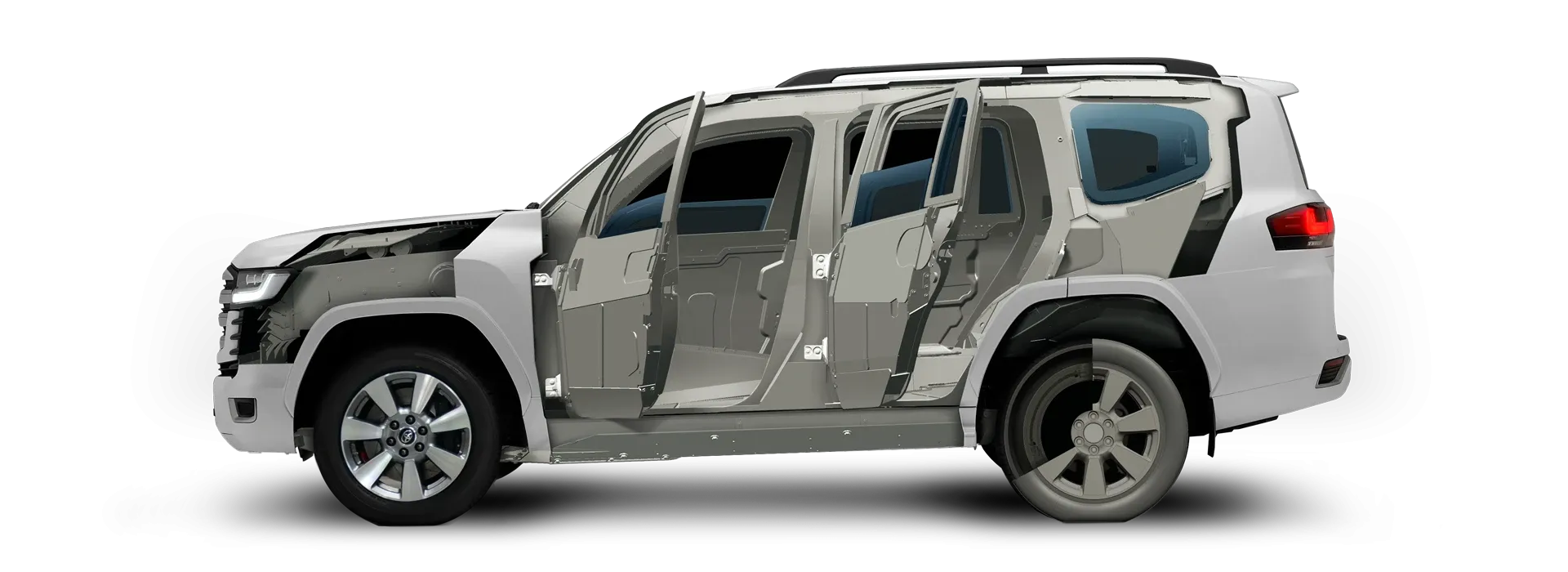
Inside the work
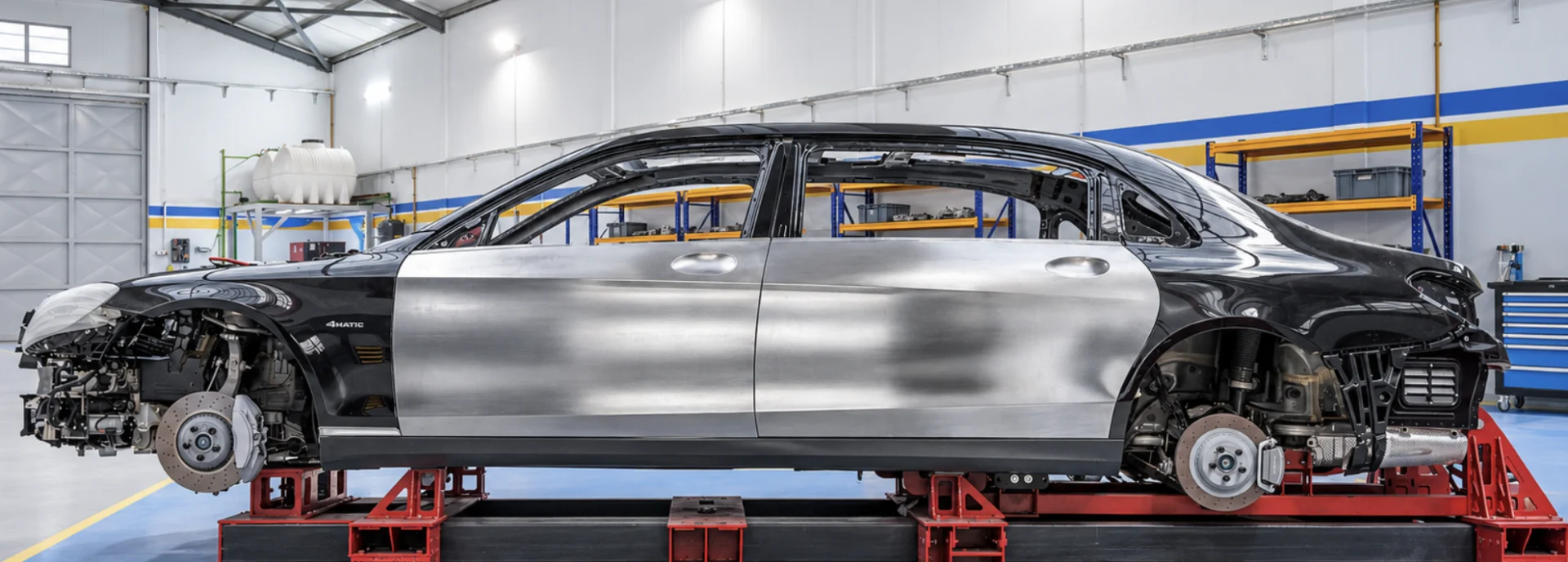
Disassembly, integration and reassembly.
Depending on the project, the vehicle may be disassembled so armor and custom components can be integrated, then its parts are reinstalled and fitted during reassembly.
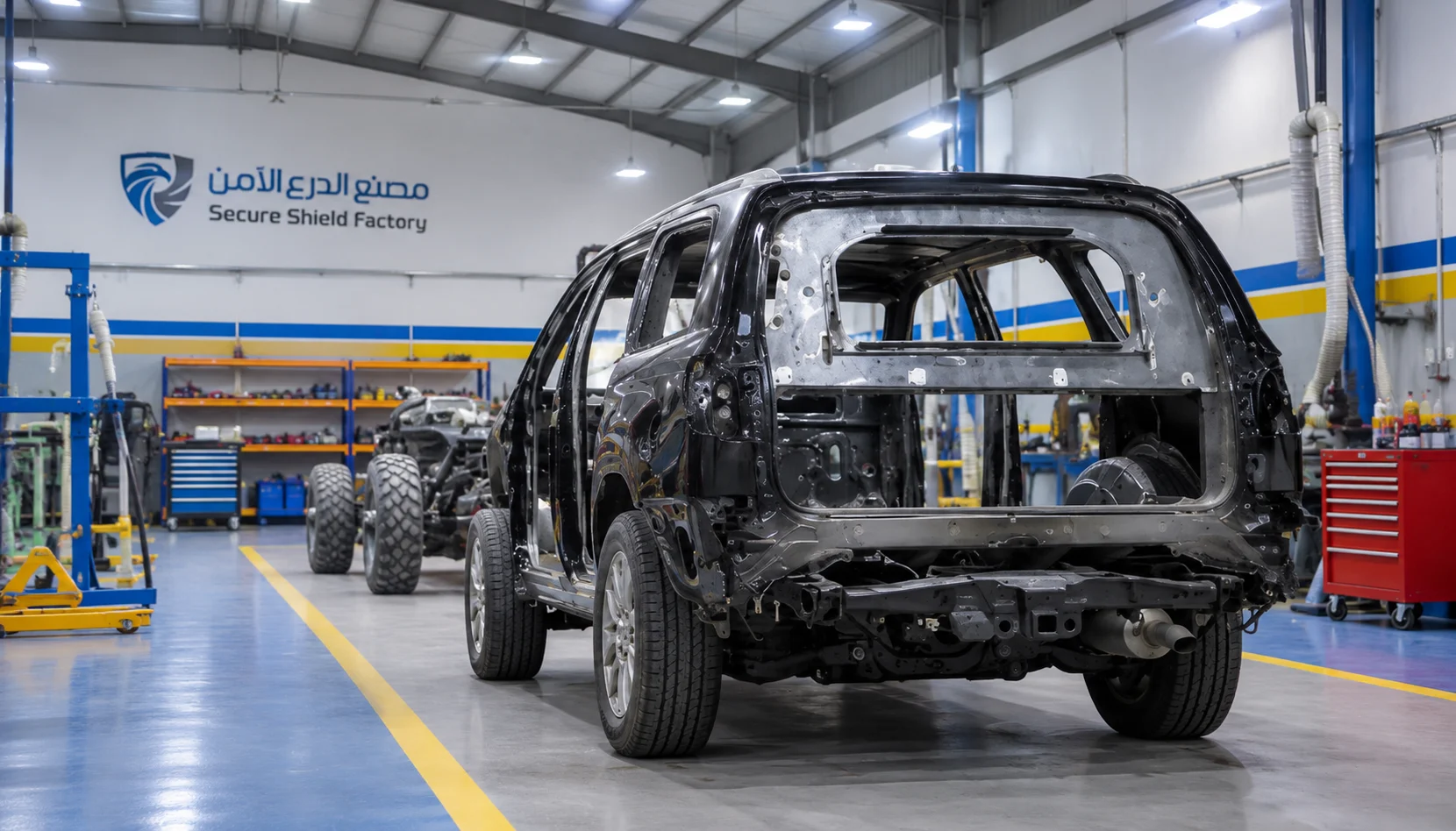
- Doors, pillars and roof
- Floor and firewall
- Transparent armor (windows)
- Suspension, brakes and wheels
- Interior trim and wiring
- Reassembly and final fit
Protection levels
Ballistic protection levels at a glance
Armored vehicle projects usually refer to recognized ballistic standards. This table is a general reference based on EN 1063, the BR classification widely used for vehicle glazing and armor.
| Level | Reference threat | Typical application |
|---|---|---|
| BR4 | .44 Remington Magnum handgun | Discreet protection against handgun threats |
| BR5 | 5.56 × 45 mm rifle (SS109) | Protection against common assault-rifle rounds |
| BR6 | 7.62 × 51 mm rifle, full metal jacket | Often requested for VIP and executive vehicles |
| BR7 | 7.62 × 51 mm rifle, hard steel core (armor-piercing) | High-threat environments |
Reference only. The protection level for a specific vehicle is agreed per project and stated only with documented test or certification evidence. Other standards, such as VPAM, may also apply.
Standards and documentation
Project data sheet
Protection standards and technical documents vary by project. Contact our team with the vehicle and requirements so we can confirm which documented information applies.
| Data sheet | What it covers |
|---|---|
| Vehicle make, model and year | Recorded at intake, with the VIN and the vehicle’s condition |
| Requested protection specification | Agreed with the client, for example BR4 to BR7 |
| Applicable standard | For example EN 1063, EN 1522 or VPAM, as agreed |
| Approved armor materials | Selected per project: ballistic steel, aramid or composite panels |
| Transparent armor | Multi-layer laminated glass with a polycarbonate inner layer |
| Test or certification reference | Stated only from documented test reports |
| Added components and equipment | For example run-flat inserts, upgraded suspension and brakes, communication equipment |
| Inspection and handover records | Inspection checklist and handover report |
Plan your project
- Step 01Vehicle or project
- Step 02Intended use
- Step 03Protection options
- Step 04Quality guide
- Step 05How we work
- Step 06Enquiry
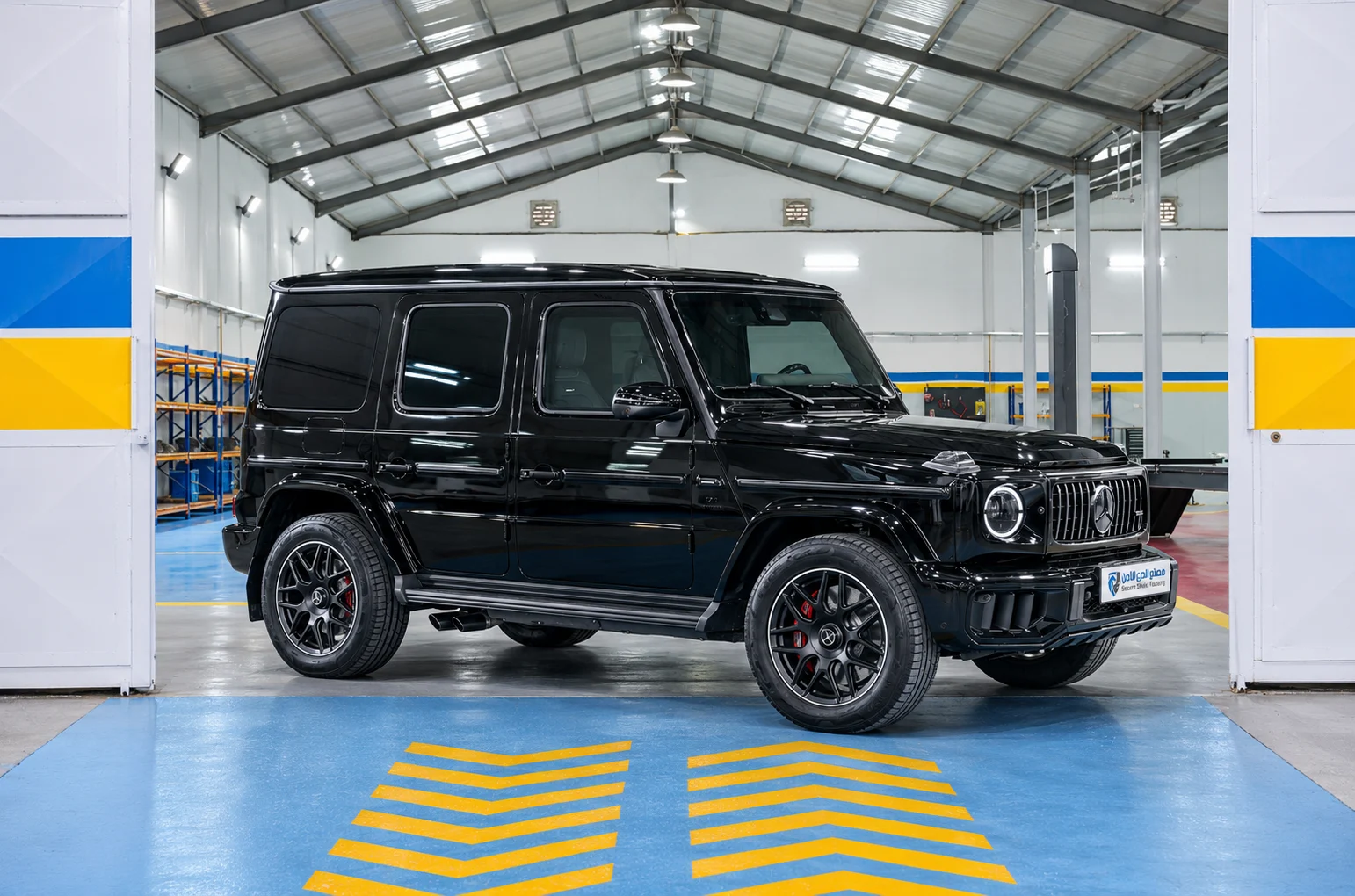
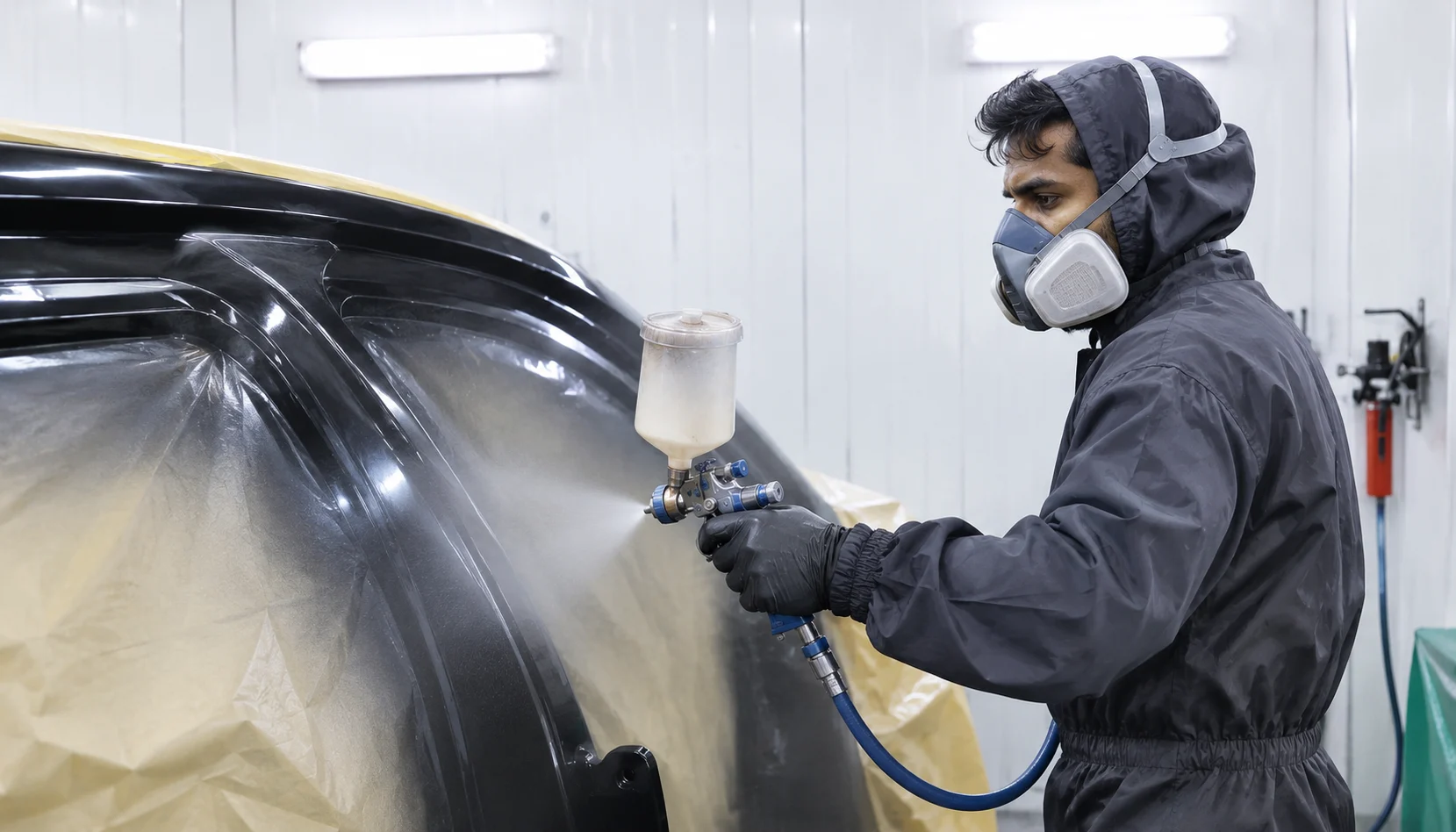
From the workshop
Have a vehicle or site to discuss?
Tell us what you need. Our team will review your enquiry and advise on the next step.